
In the interest of promoting more robust discourse around the importance of regular vaccinations for serious but preventable contagious conditions, MHA@GW is hosting a guest post series in honor of National Immunization Awareness Month (NIAM). During the month of August, we’re featuring blogs from thought leaders and advocates who were asked to answer the question, “Why immunize in 2015?” You can read an excerpt of Vaccine Ambassadors Executive Director Jackie Kaufman’s piece here, and be sure to read on to explore more NIAM posts. MHA@GW is the online master of health administration from the Milken Institute School of Public Health at the George Washington University.
“The absence of disease in our society has made us complacent. Without a direct memory of these events it is difficult to put this medical marvel into context. What many of us fail to realize is that our experience is the exception and not the rule. In many areas of the world where vaccinations have not become “routine,” parents and children continue to fear the very diseases we have forgotten. In 2013, it was estimated that 145,000 people (mostly children younger than 5) died from measles, a disease that has been preventable for over a half a century.
To be honest, it is difficult to find something fresh that hasn’t been said over and over again, whether it is a rehash of vaccine safety (myths versus facts), Andrew Wakefield’s debunked paper, conspiracy theories, or the motivation of big pharma. It occurred to me that we are continually taking the field in a defensive position, pushing back the false claims rather than creating our own narrative. We need to do better in conveying the amazing impact that vaccines have had and continue to have on our world. Parents, health care providers, and the media (no, there are not two sides) should resound with a common voice. Let’s move beyond the tired old arguments and focus on our messaging. The facts are the facts, but the question is how do we convey them so that they are meaningful and effective?” Read the rest of her post here.
Sophia Bernazzani is the community manager for the MHA@GW and MPH@GW, both offered by the Milken Institute School of Public Health at the George Washington University. She’s passionate about global health, nutrition, and sustainability. Follow her on Twitter.
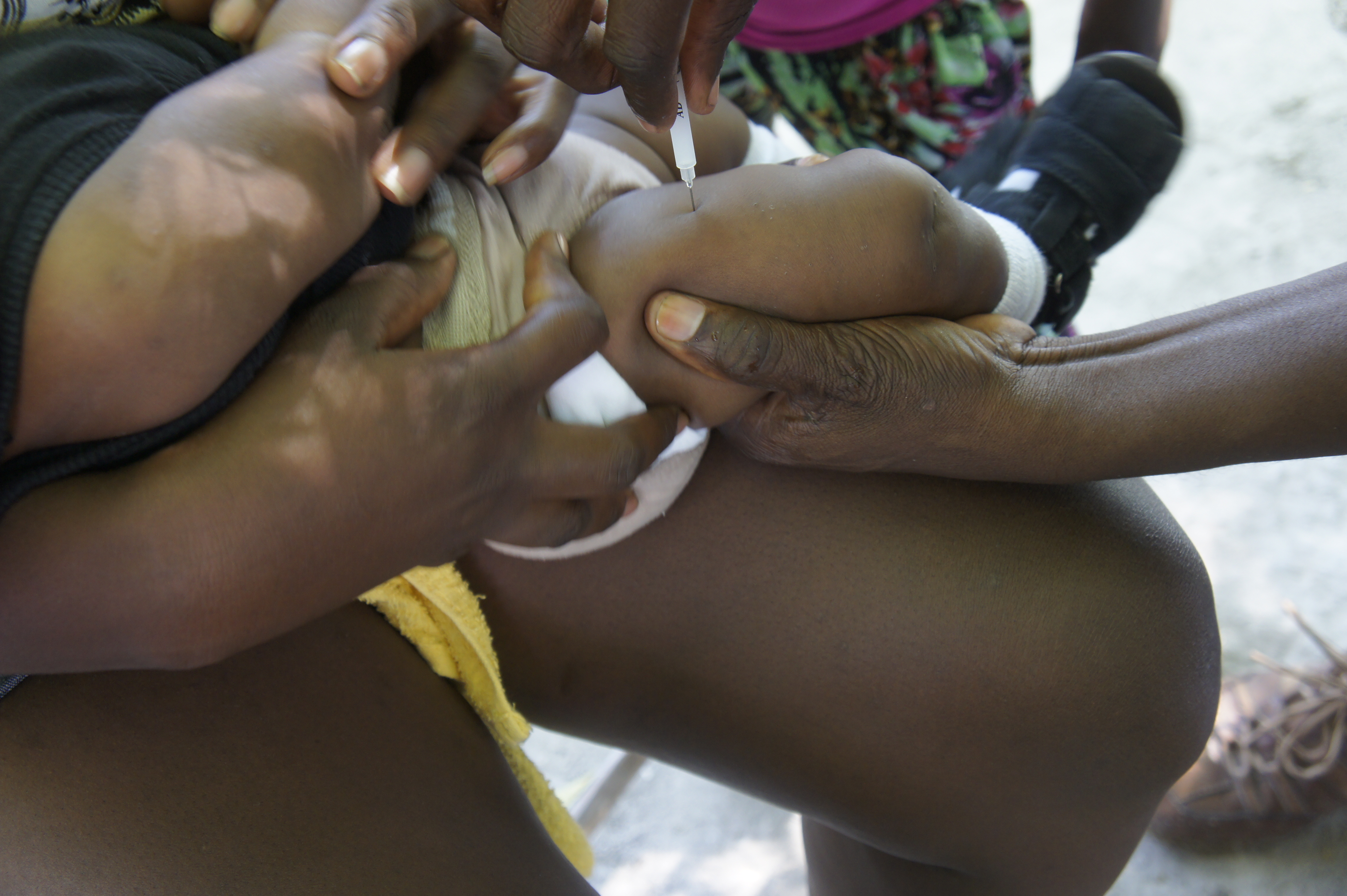
Photo: Mobile clinic in Deschapelles, Haiti. Jennifer James