
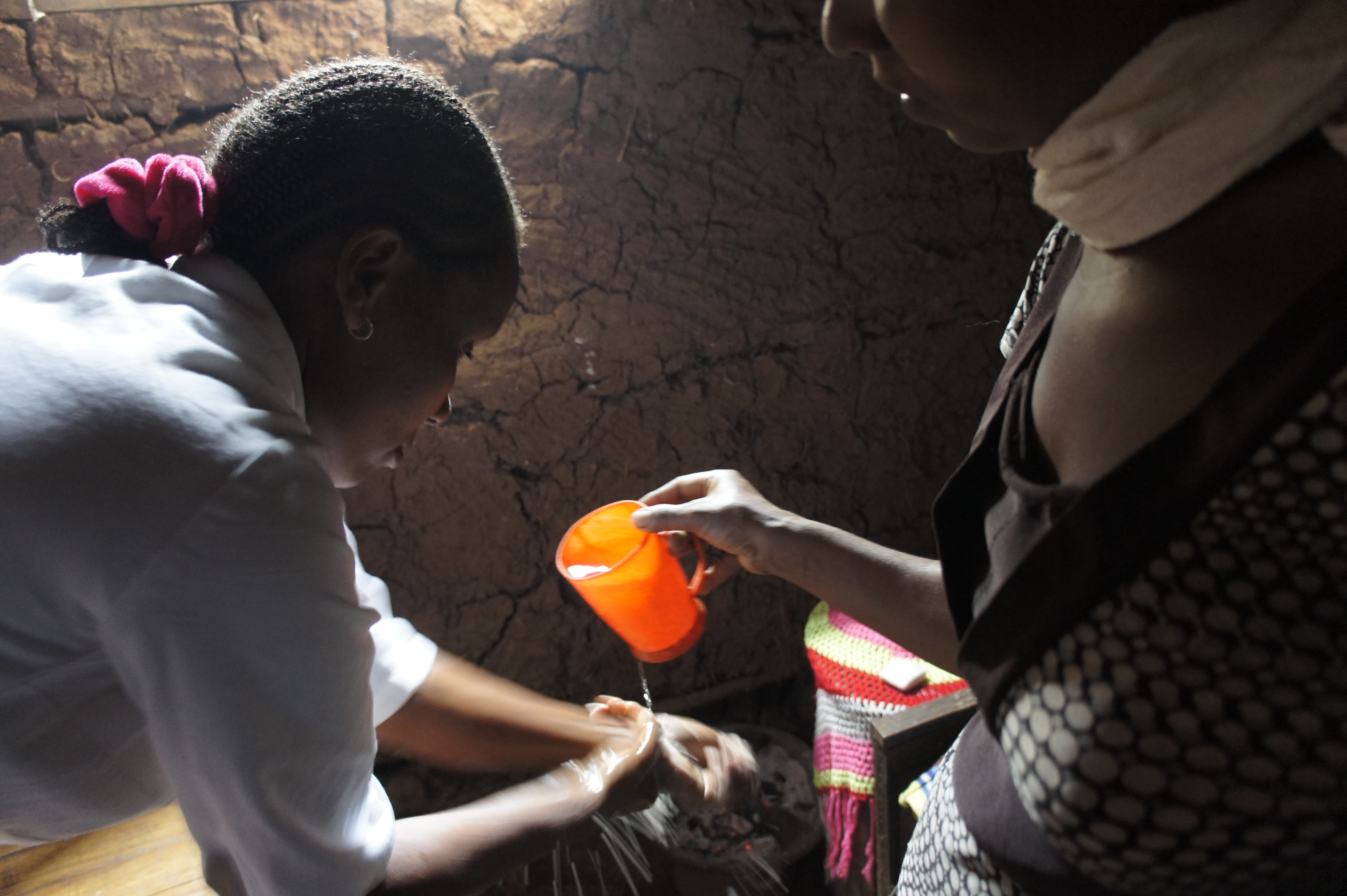

One of the top three killers of children under the age of five globally is diarrhea. Human feces carries diarrhea pathogens and “a single gram of human feces can contain 10 million viruses and one million bacteria“. An easy way to curb deaths of children under five is to simply wash one’s hands. This goes for pneumonia as well, another global killer of children in low- and middle-income countries.
Handwashing is an intervention that works, but one that proves hard to catch on in some parts of the world due to a lack of knowledge, behavioral norms, and a lack of soap! Studies show most homes worldwide have soap, but it is typically used to wash clothes and not hands. If one simply washes their hands it breaks the cycle of a disease. That is how powerful, effective, and inexpensive handwashing is, but unfortunately isn’t used nearly enough to curb some of the most deadly infectious diseases that take the lives of millions of children every year.
October 15 is the annual Global Handwashing Day where over 200 million people celebrate handwashing around the world to reinforce the importance of washing hands to stay healthy and ultimately save lives. Simply washing one’s hands with soap significantly reduces the spread of disease. And yet, given that, data shows that health workers only wash their hands 40% of the time when they are in a health care setting. That is certainly unacceptable and one of the primary reasons Global Handwashing Day exists. Studies also show that children who live in homes where handwashing is a part of the regular routine are more healthy than those who do not.
In recent months you can see how handwashing is critical to stopping spread disease as there have been scaled-up distributions of handwashing kits in western African countries that have been hardest hit by Ebola.
In order to help reduce the two million child deaths that occur every year from pneumonia and diarrhea, handwashing needs to not only be widely adopted but perpetually practiced. It is suggested that hands should be washed with soap after using the toilet or cleaning a child’s bottom and before handling food, according to the CDC. Hands should also be washed before cooking, eating, and feeding a child. These recommendations seem simple, but aren’t used nearly enough to significantly reduce the number of preventable child deaths globally.
Learn more about global handwashing at globalhandwashing.org.
Photo: Jennifer James



Leave a Reply