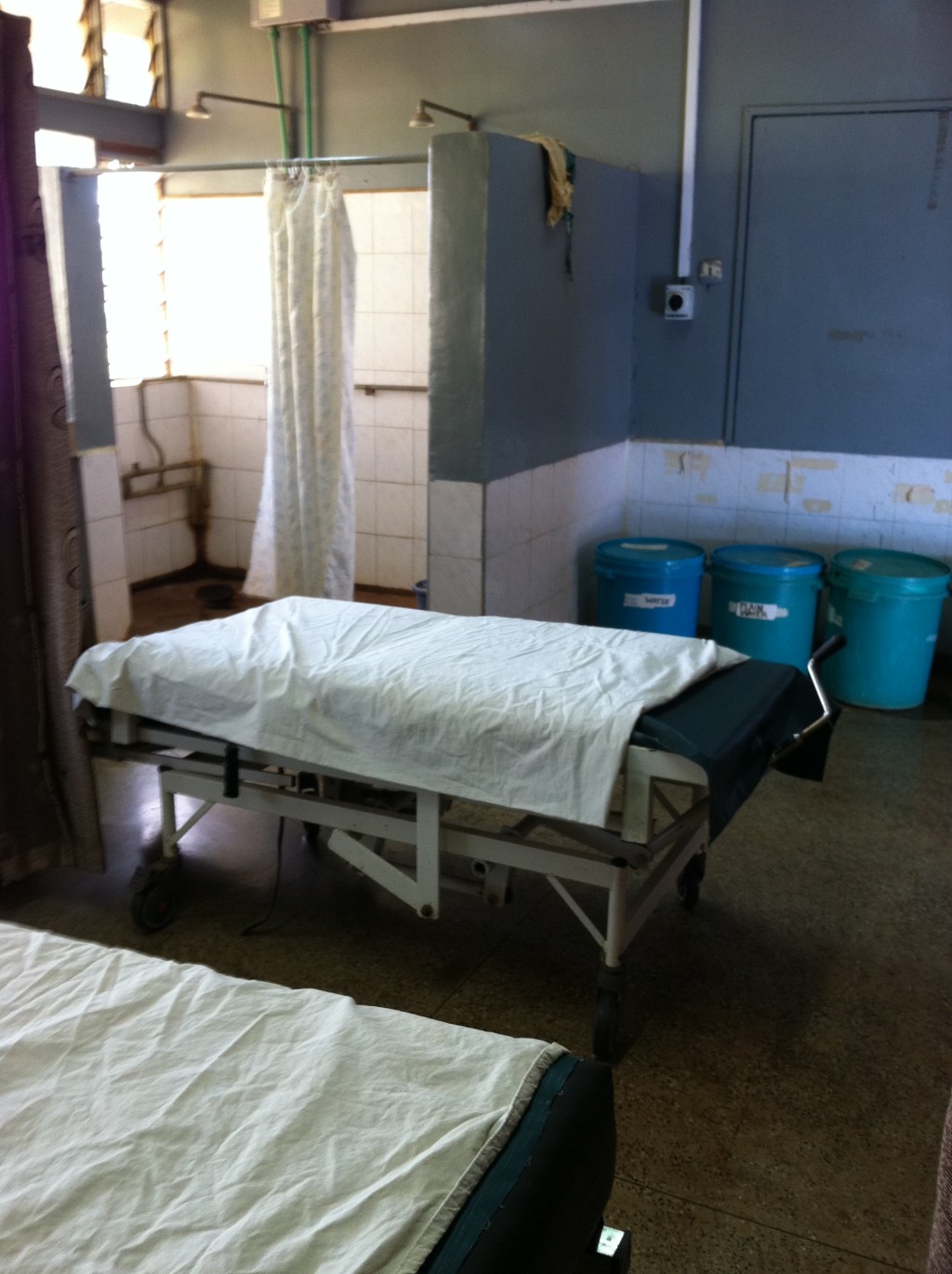
Every day 800 women die from preventable causes during pregnancy and childbirth. That is 292,000 women too many each year. One of the ways in which this statistic can be reduced is by simply encouraging women in low- and middle-income countries to deliver in health facilities with skilled health workers. That sounds simple enough, but it has been challenging. The number of midwives in most sub-Saharan countries, for example, desperately needs to be scaled up and in some cases health facilities and hospitals are too far for women who live in the deepest rural areas to reach. In these cases many women still prefer delivering at home which, of course, poses untold dangers to her life and the life of her baby.
But there is an underlying factor that many don’t address nearly enough that perpetually forces women to choose delivery at home over a health facility: the harsh treatment they receive from nurses and midwives at the health facilities.
It has been documented time and again that African health workers in particular can be bluntly unsympathetic and insensitive to women who are in labor and delivery. Just listen to the health worker in this mini-documentary, Birth is a Dream. At 5:00 you hear a woman crying uncontrollably during delivery and then you hear the female health worker tell her harshly, “Excuse me, there is nothing to cry like that as if they are beating you. Will you relax? Let the midwife do what’s she’s supposed to do!”
This, I am sure, happens every day and frankly, who wants to be treated in this manner? I would deliver at home, too! The problem is so bad that the White Ribbon Alliance for Safe Motherhood led the charge on drawing up Universal Rights of Childbearing Women.
An article published this week in Nigeria’s Daily Post, Why Pregnant Women Prefer Delivering at Home in Kaduna, tackles this issue.
One of the pregnant women at the hospital who pleaded anonymity said that attitude of nurses sometimes scare women away from coming to deliver at the hospital.
Also
According to a mother of three in Kaduna who does not want her name mentioned when she was in labour at one of the government hospitals, instead of pampering and encouraging her to be patient and optimistic as a first timer, some of the nurses rained all sort of abuses on her and one of them slapped her and this discouraged her from going to the hospital for delivery.
A recent study conducted in Morogoro, Tanzania, Experiences of and responses to disrespectful maternity care and abuse during childbirth; a qualitative study with women and men in Morogoro Region, Tanzania, asked women about their birth experiences. Women recounted being shouted at for things like “wearing old or dirty clothes” or “having too many children; “ruining” one’s body” and a woman in the study recounted by slapped during delivery.
A woman was yelled at, during her delivery, for having too many children.
The nurse gets angry. She tells you, ‘You have already delivered many children. This is enough! Look at the others who have delivered only twice or thrice and stopped!’ You will (be in the middle of labor) and hear the nurse saying ‘Come and stop having children!’
– Woman, Ulanga District
With a wide range of interventions designed to encourage more mothers to deliver in health facilities it is also incumbent upon governments, global health experts, the private sector, NGOs, and health workers themselves to change the attitude some unjustly express toward women who are giving birth. Having a baby should be a joyous occassion, not one steeped in unnecessary verbal and sometimes physical abuse on top of the health challenges of giving birth in low resource settings.
There are several reasons a woman may stay home and deliver her baby even when the chances are higher that she might die. The cost of delivery may be too high. It may be for cultural reasons. She may not have the requisite items to take to a health facility. The health facility may simply be too far. But being afraid of abuse from a nurse or midwife shouldn’t be one of them.


Leave a reply to Kemi Ogunyemi Cancel reply